 GeneTune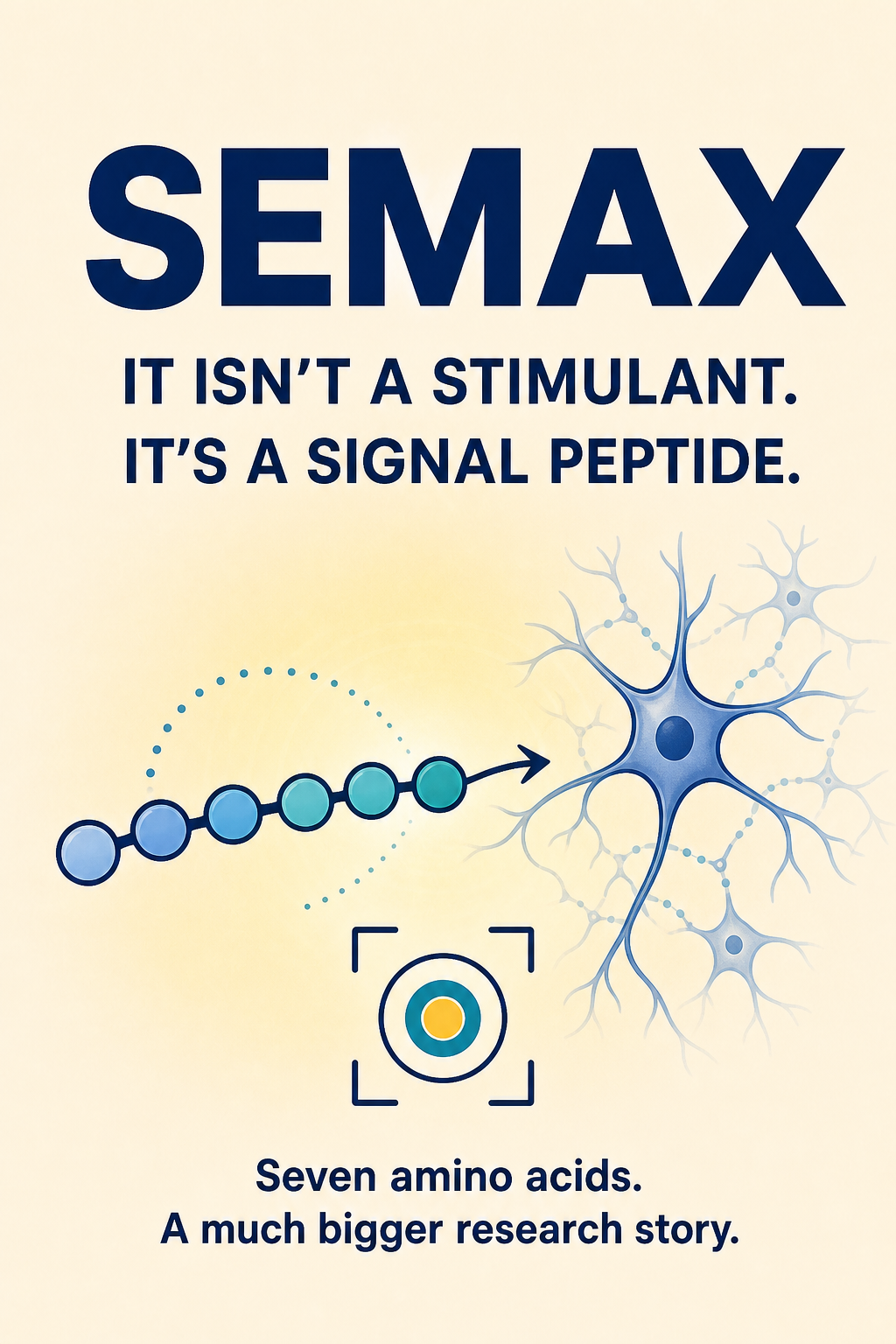
01 / The story
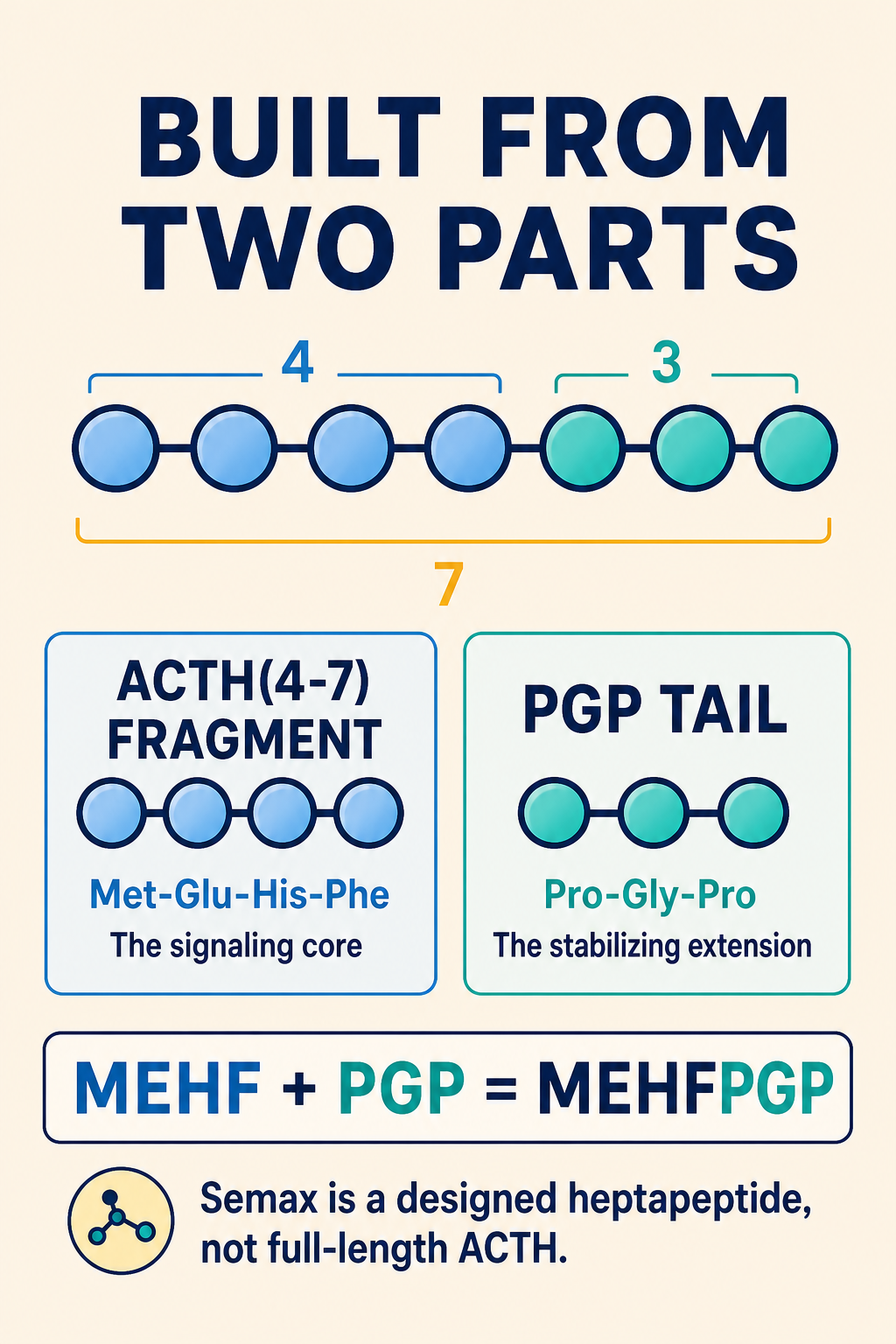
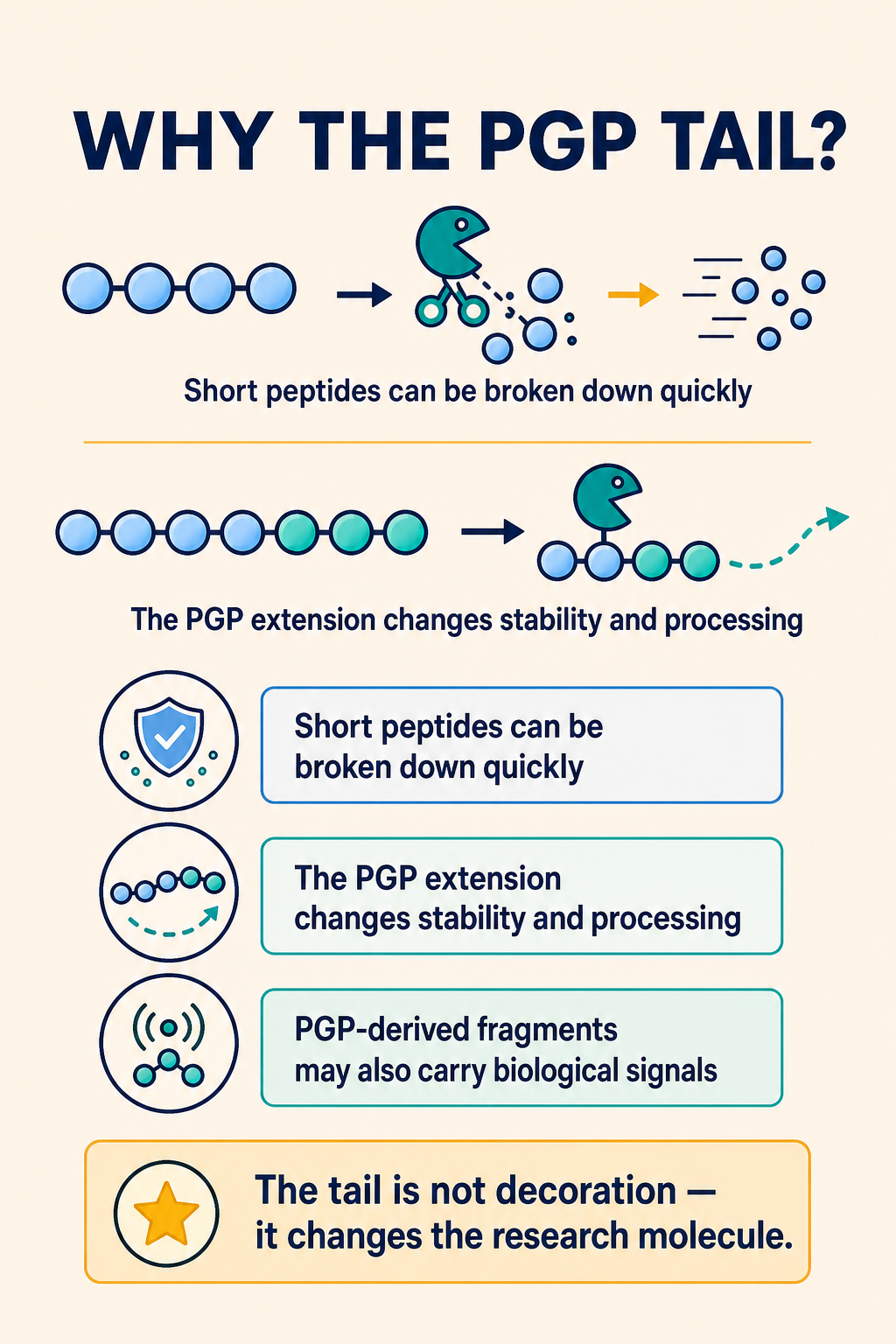
Semax is a designed seven-amino-acid peptide. Its ACTH-related fragment and Pro-Gly-Pro tail are a useful way to understand why researchers study its signaling and processing.
02 / In plain language
01
The design
An ACTH(4–7)-related fragment is paired with a Pro-Gly-Pro extension.
02
The research question
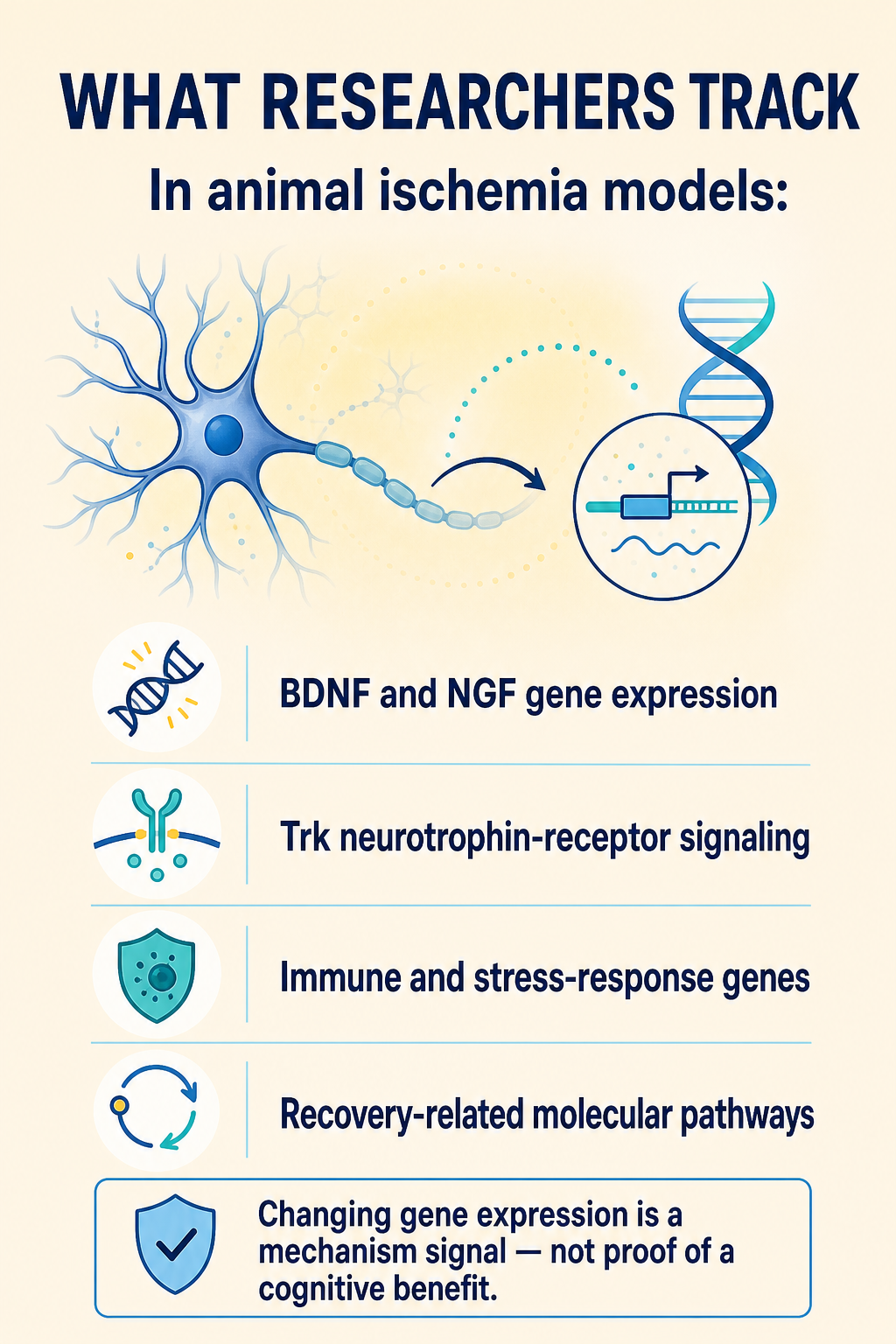
Animal ischemia models have examined neurotrophin and stress-response pathways.
03
The distinction
A molecular signal does not establish a focus or memory benefit in healthy people.
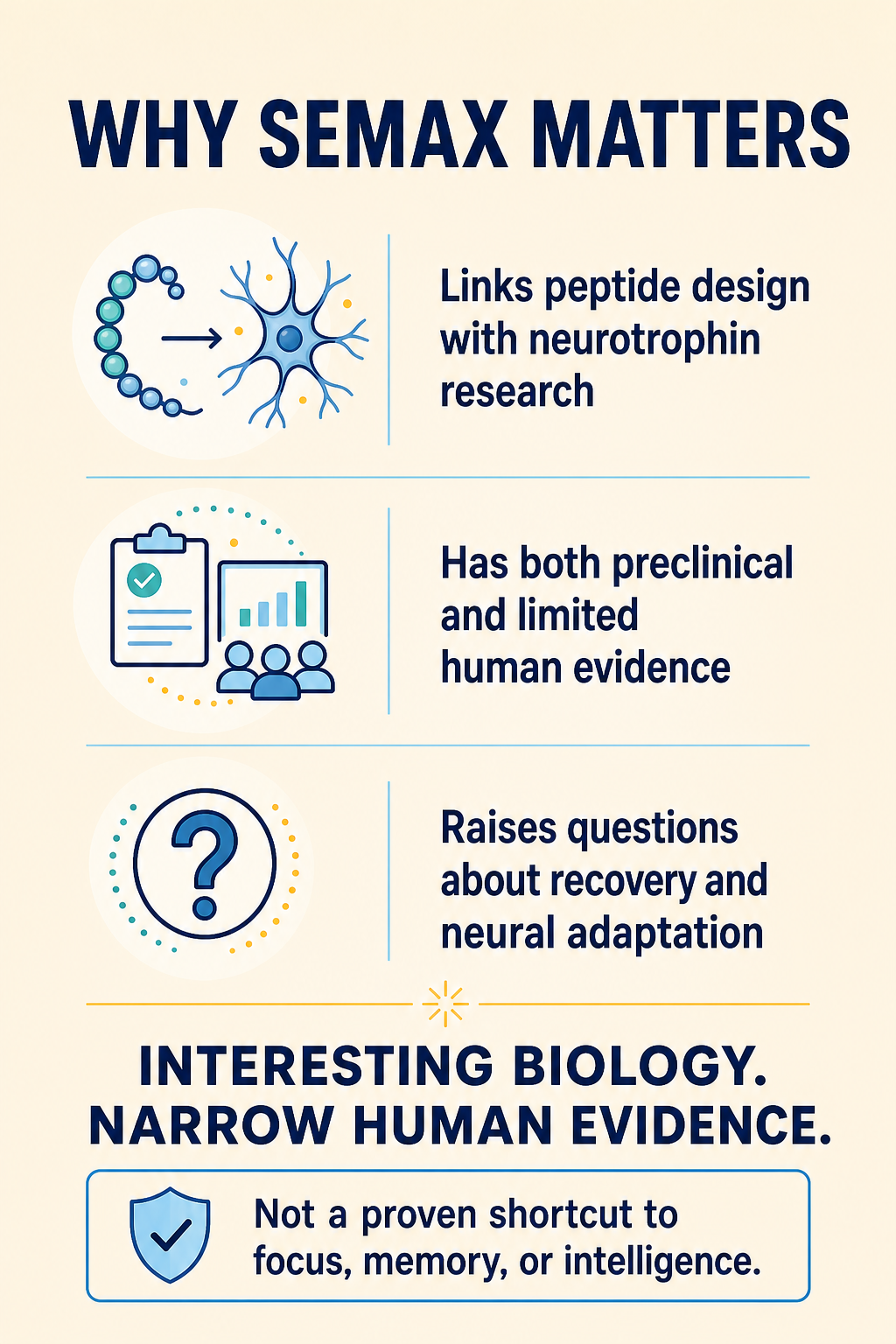
THE IDEA TO KEEPInteresting biology. Narrow human evidence.
03 / Where the evidence stops
Preclinical + limited human research
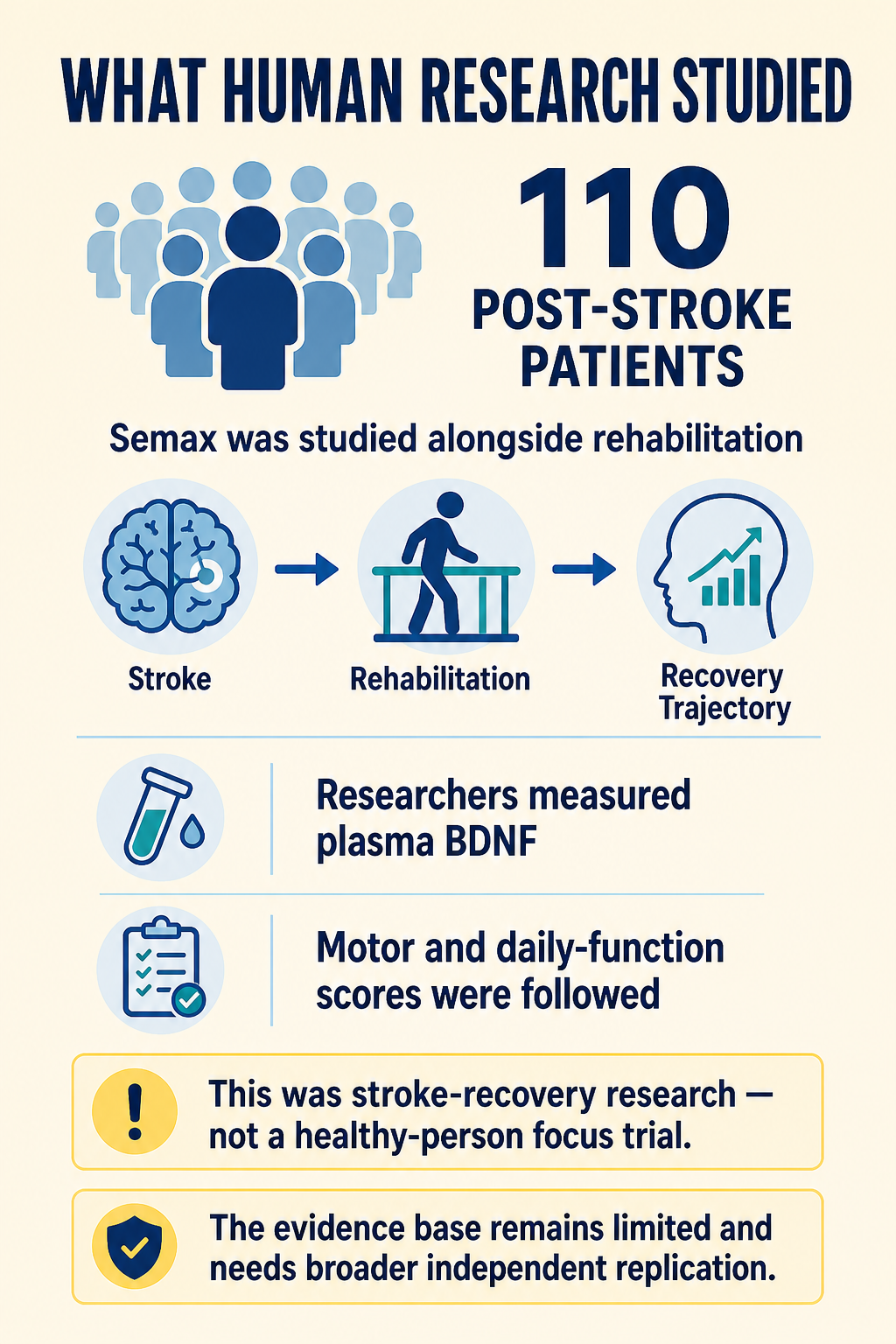
A study of 110 people after ischemic stroke examined Semax alongside rehabilitation and followed BDNF and functional measures. That study does not answer whether it improves everyday cognition in healthy people.
Sources & reading
Original TikTok caption
Semax is often described online as a stimulant or “smart drug.” That skips the most interesting part of its biology.

It is a seven-amino-acid synthetic peptide built from an ACTH(4-7)-related signaling fragment plus a Pro-Gly-Pro tail. Researchers have examined how this design influences neurotrophin, immune and stress-response pathways, especially in animal models of cerebral ischemia.

There is also limited human research in post-stroke rehabilitation, including a 110-patient study that followed plasma BDNF and functional recovery. But that is not the same as proving cognitive enhancement in healthy people.

Small peptide. Complex signal. Narrow human evidence.

#semax #peptidescience #neuroplasticity #bdnf #brainresearch #learnontiktok