 GeneTune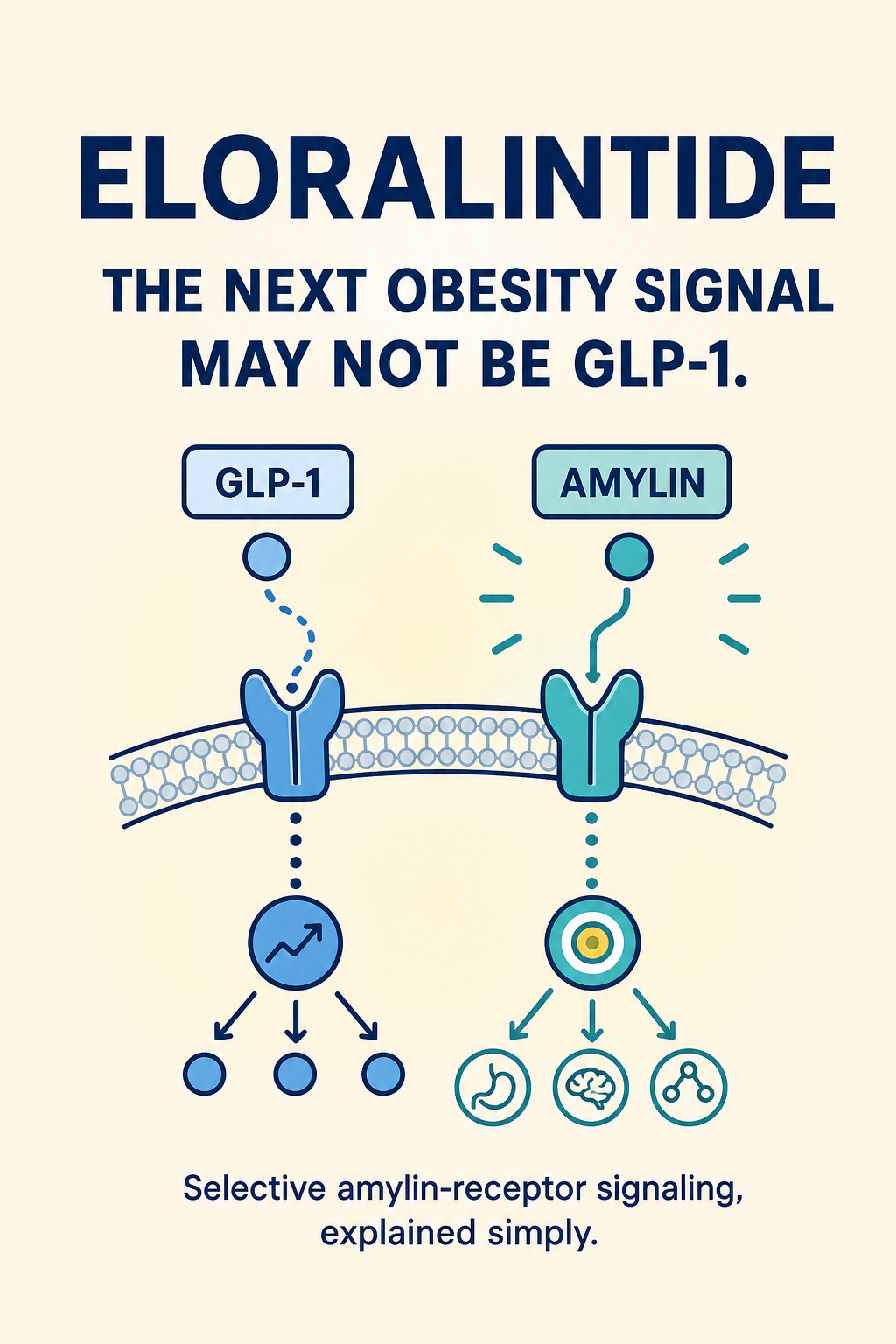
01 / The story
Eloralintide is being studied as a selective amylin receptor agonist. The starting receptor differs from GLP-1, even though both research stories touch eating and body weight.
02 / In plain language
01
The familiar model
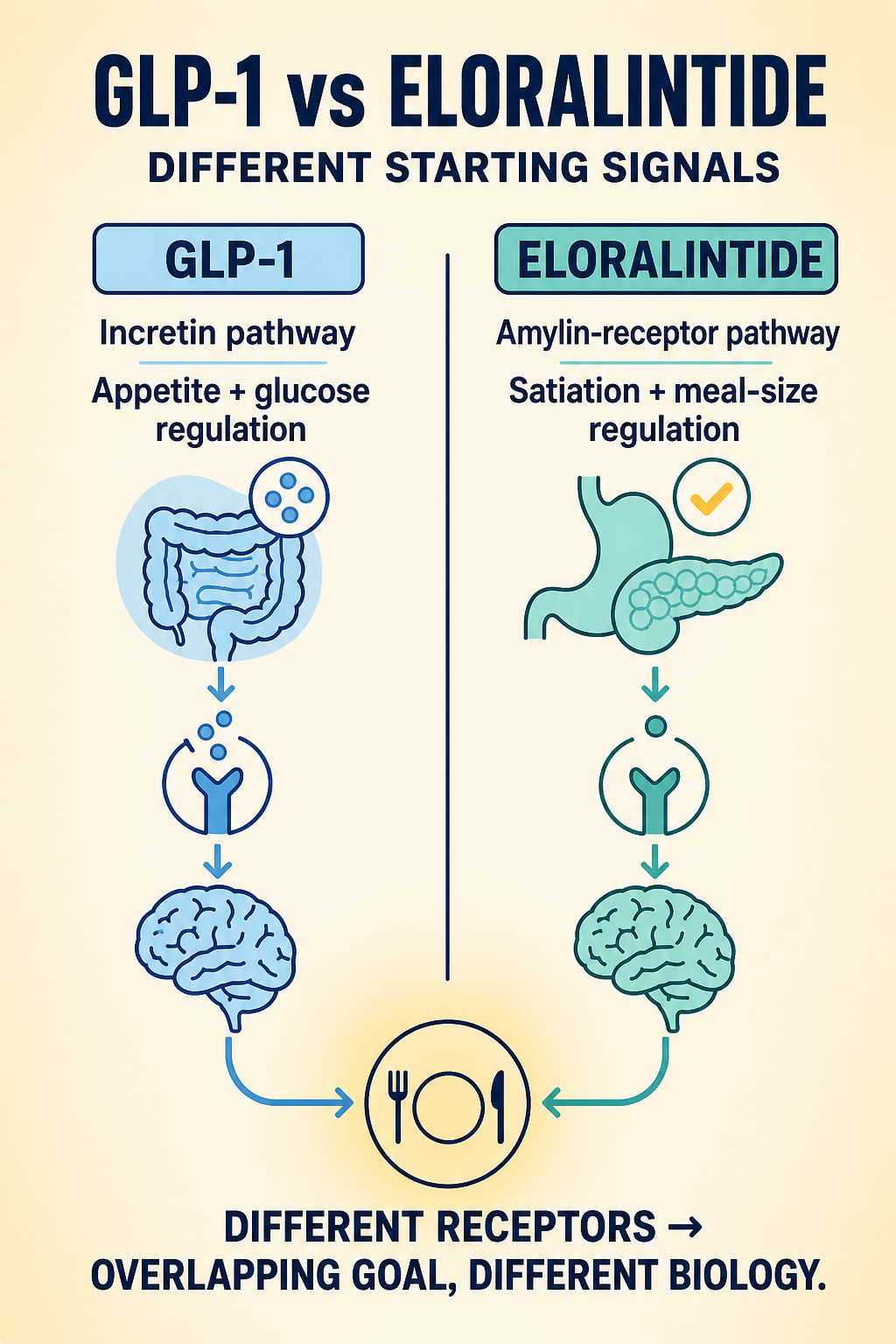
GLP-1 is part of an incretin pathway involved in appetite and glucose regulation.
02
The other signal
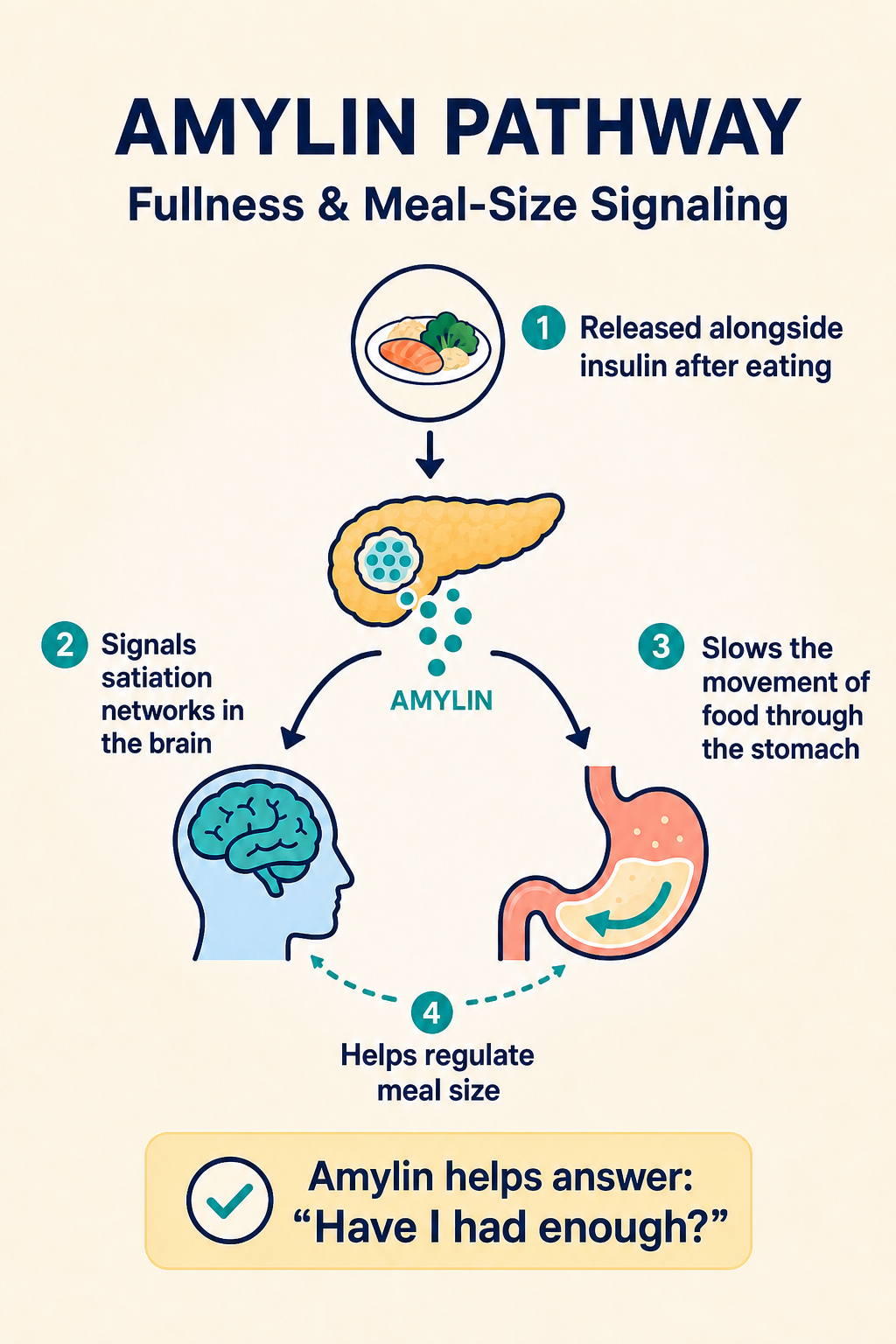
Amylin is released with insulin after eating and helps regulate satiation and meal size.
03
The key difference
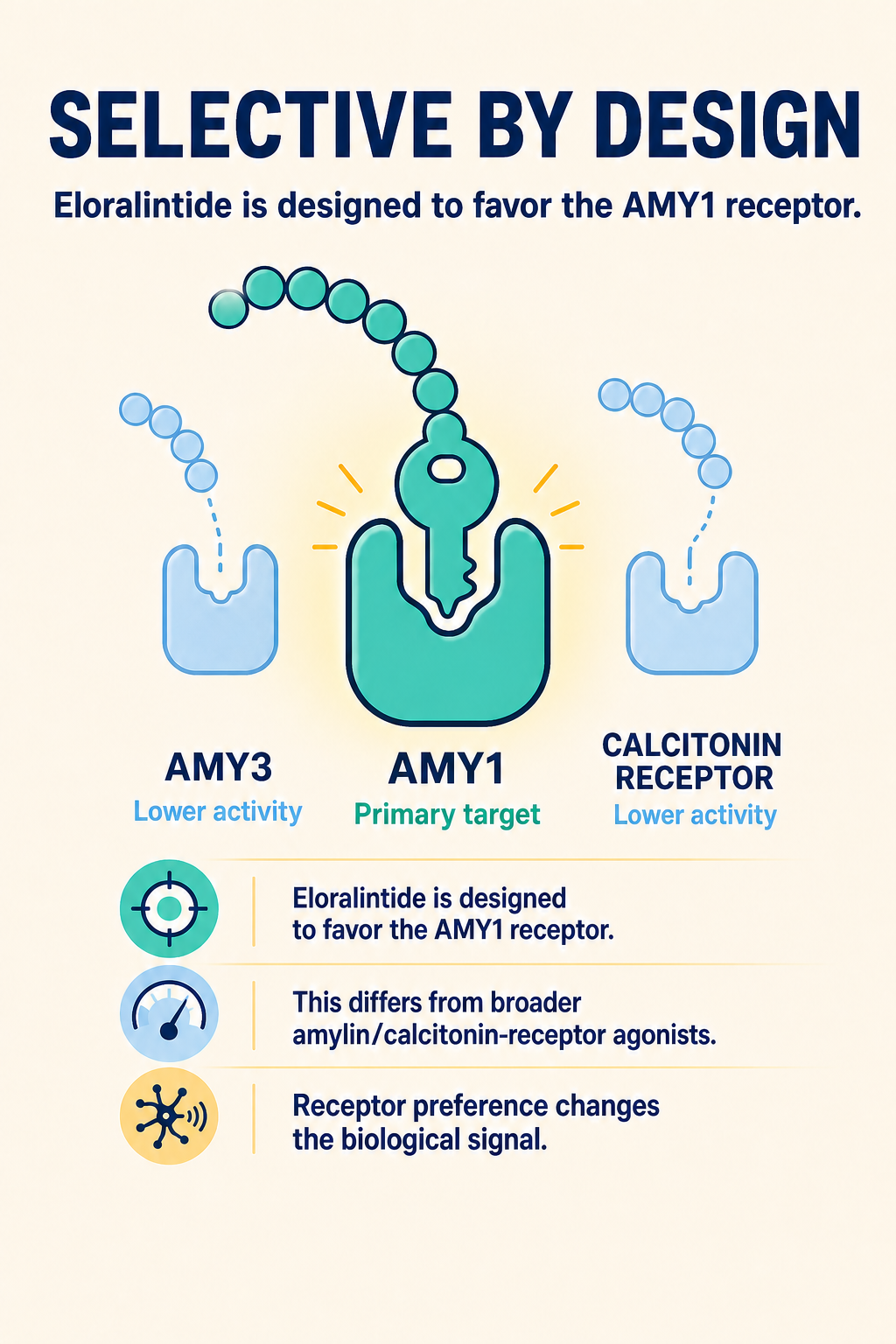
Eloralintide was designed to favor the AMY1 receptor, giving researchers a different entry point.
THE IDEA TO KEEPDifferent receptor. Overlapping goal. Different biology.
03 / Where the evidence stops
Human trial · Phase 2
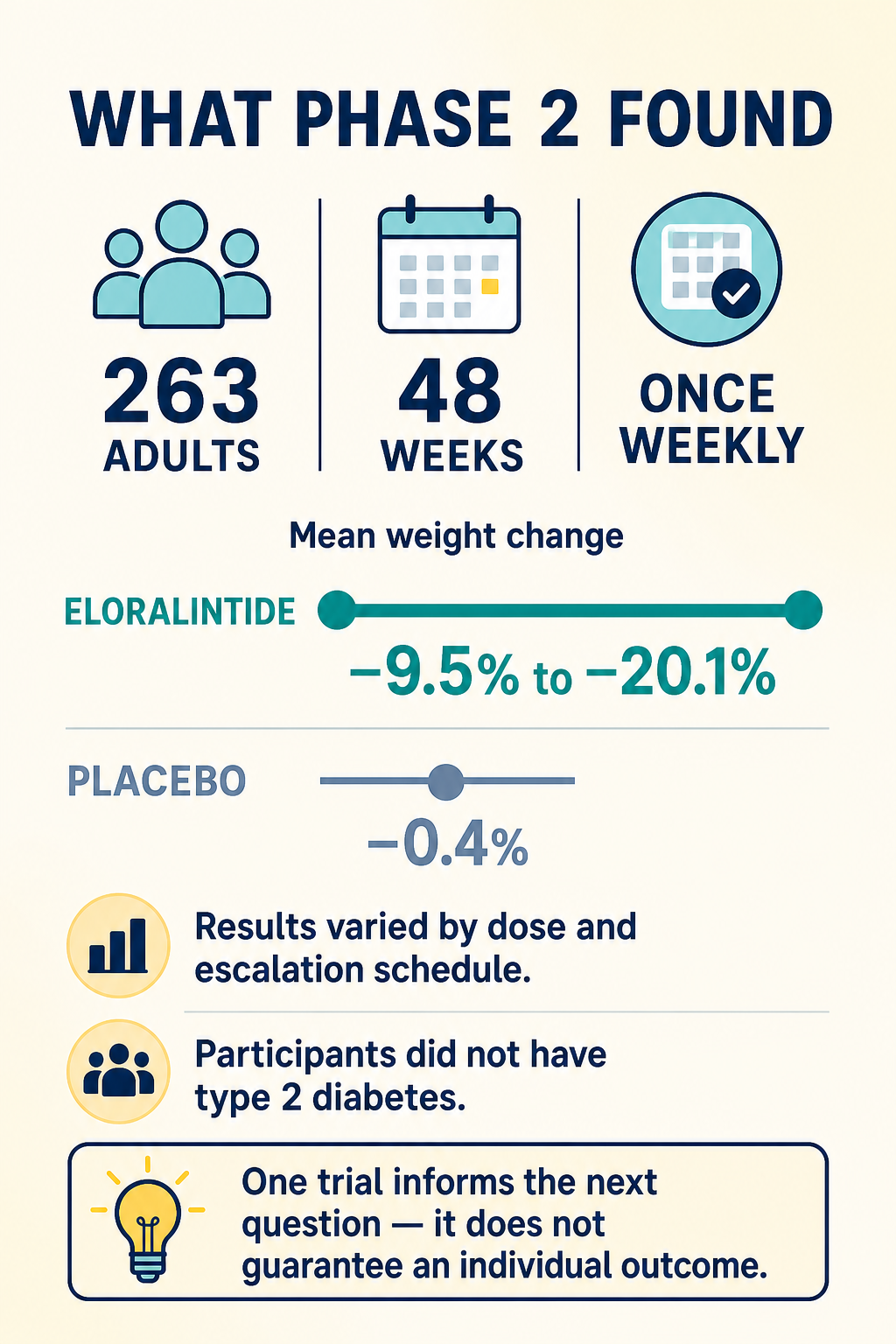
A randomized 48-week Phase 2 trial enrolled 263 adults without type 2 diabetes. Its results are one clinical step, not a prediction of an individual outcome.
Sources & reading
Original TikTok caption
Most people assume the next obesity drug candidate must be another GLP-1.

Eloralintide tells a different biological story. It is a selective amylin receptor agonist — a pathway involved in satiation and meal-size regulation rather than the GLP-1 receptor.

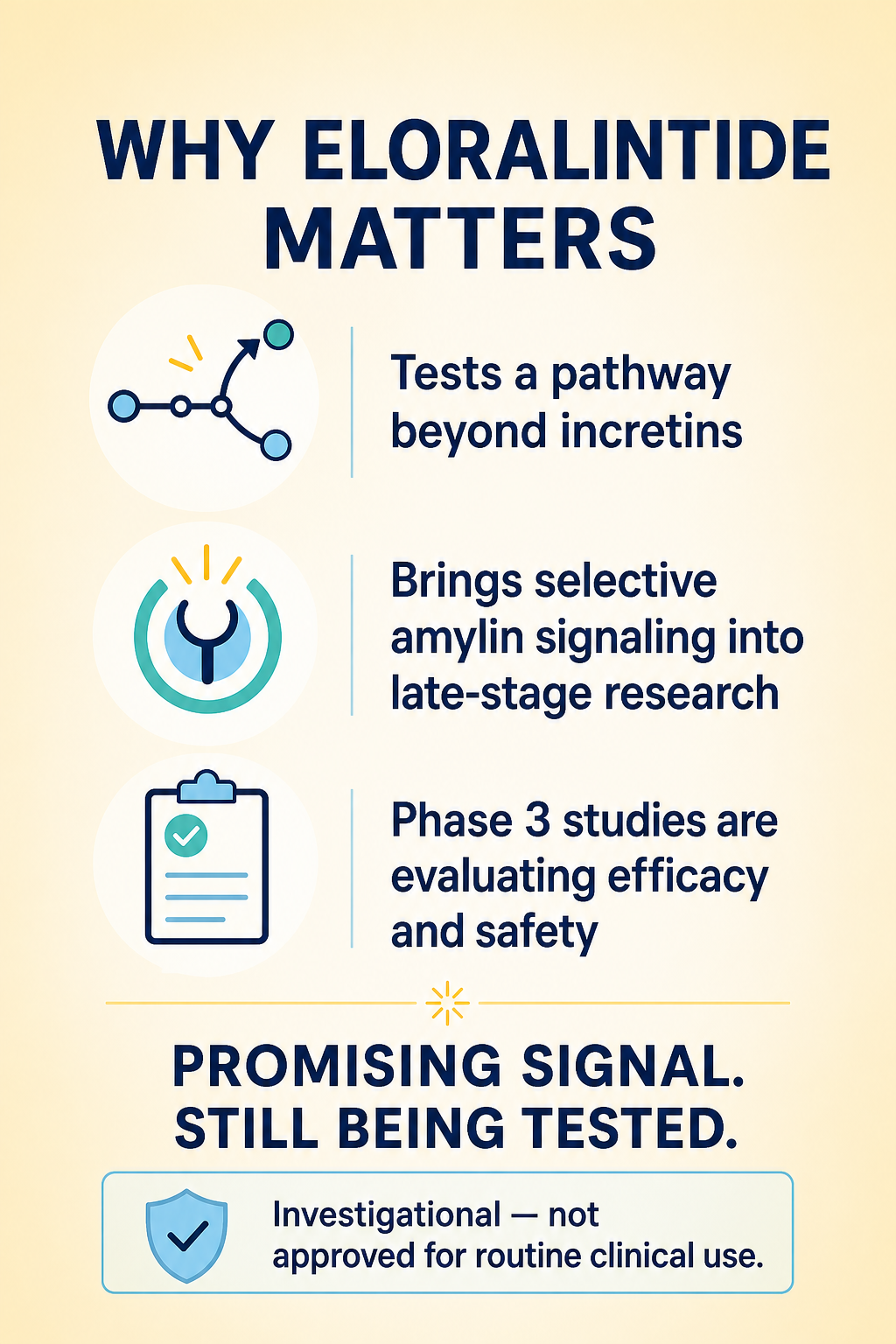
In a 48-week Phase 2 trial involving 263 adults without type 2 diabetes, mean weight reductions ranged from 9.5% to 20.1% across eloralintide groups, compared with 0.4% for placebo. The result is promising, but eloralintide remains investigational and Phase 3 studies are still evaluating its efficacy and safety.

Not another GLP-1. A different receptor story.

#eloralintide #amylin #obesityresearch #peptideeducation #metabolichealth #learnontiktok